VoiceQA: AI-powered Quality Assurance & Analytics for PBX Systems
liviu
Author
Most call centers review about 2–3% of their conversations. The rest? Nobody knows what happened. Maybe the agent followed the script. Maybe they didn’t. Maybe a customer walked away frustrated and you’ll only find out when they churn.
Fineguide’s VoiceQA flips that number to 100%. Every call is transcribed, evaluated against your rules, and scored — automatically, by AI. No sampling, no guesswork, no waiting weeks for a QA report that’s already outdated.
Here’s what it actually does.
Automatic Transcription and Evaluation
When a call recording lands in VoiceQA — whether through an integration with your telephony provider or a manual upload — the system gets to work immediately. First, it transcribes the audio with speaker labels, so you get a clean dialogue between agent and customer. Then it evaluates the conversation against the rules you’ve defined, scoring each one individually.
The result isn’t just a number. For every rule, the AI provides the score, evidence pulled directly from the transcript, reasoning for the assessment, and a concrete suggestion for improvement. It’s the kind of detailed feedback that would take a human reviewer 15–20 minutes per call — delivered in seconds.
Departments, Rules, and Categories
Not every team plays by the same rules — and they shouldn’t have to. VoiceQA lets you create departments that mirror your actual org structure: Sales, Support, Billing, Technical, or whatever makes sense for you. Each department gets its own set of evaluation rules, its own scoring method, and its own performance dashboards.
Rules are the heart of the system. They’re plain-language statements that describe what a good call looks like — things like “Agent verified the customer’s identity before accessing account information” or “Agent offered a clear next step before ending the call.” You write them in your own words, and the AI knows how to evaluate against them.
Rules can be grouped into categories (Opening, Problem Resolution, Compliance, Closing — whatever fits), and you can mark each rule as applying to incoming calls, outgoing calls, or both.
You also get to choose between fixed scoring (every rule counts equally) and weighted scoring (critical rules are worth more). A compliance team might want fixed; a sales team probably wants weighted.
Staff Performance Tracking
Every agent builds up a performance profile over time. You can see their average quality score, how many conversations they’ve handled, and how they perform across different rule categories. An interactive chart lets you track trends over any date range — is this agent improving? Did last week’s coaching make a difference?
The category-level breakdown is where it gets really useful. You might discover that an agent scores well on technical accuracy but consistently underperforms on empathy. That’s a specific, actionable coaching conversation — not a vague “do better.”
Client Tracking
VoiceQA also keeps track of the other side of the conversation. You can create client profiles (individuals or companies), associate phone numbers with them, and build up a full interaction history. When a known number calls in, the client is linked automatically.
Over time, you can see patterns: which clients generate the most calls, how quality trends look for a specific customer, whether a particular relationship is heading in the wrong direction. It’s a lightweight CRM layer built right into your QA workflow.
Dashboards and Analytics
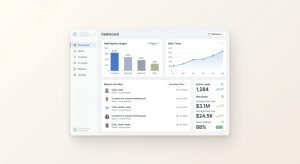
At the organization level, a statistics dashboard shows you the big picture: total minutes evaluated, credit usage, and performance trends across departments. Drill into any department and you get a more focused view — rule-level analytics, top and bottom performers, and category averages over time.
The rules performance view is particularly useful. It tells you which rules your team consistently nails and which ones keep causing problems. If 80% of your agents score poorly on the same rule, the issue probably isn’t the agents — it’s the training, the process, or maybe the rule itself.
Multilingual, Out of the Box
VoiceQA supports over 30 languages for transcription and evaluation. Your team in Bucharest and your team in Madrid can both use the same platform with evaluations in their respective languages. You configure the evaluation language per department, so there’s no one-size-fits-all limitation.
In essence
VoiceQA takes every call your team handles — not a sample, every single one — and turns it into structured, scored, actionable feedback. Your QA team stops spending hours listening to recordings and starts spending their time on what actually matters: coaching agents, improving processes, and keeping customers happy.
Set up your departments, write your rules, connect your phones, and let the AI do the rest.